

Note from the Editor
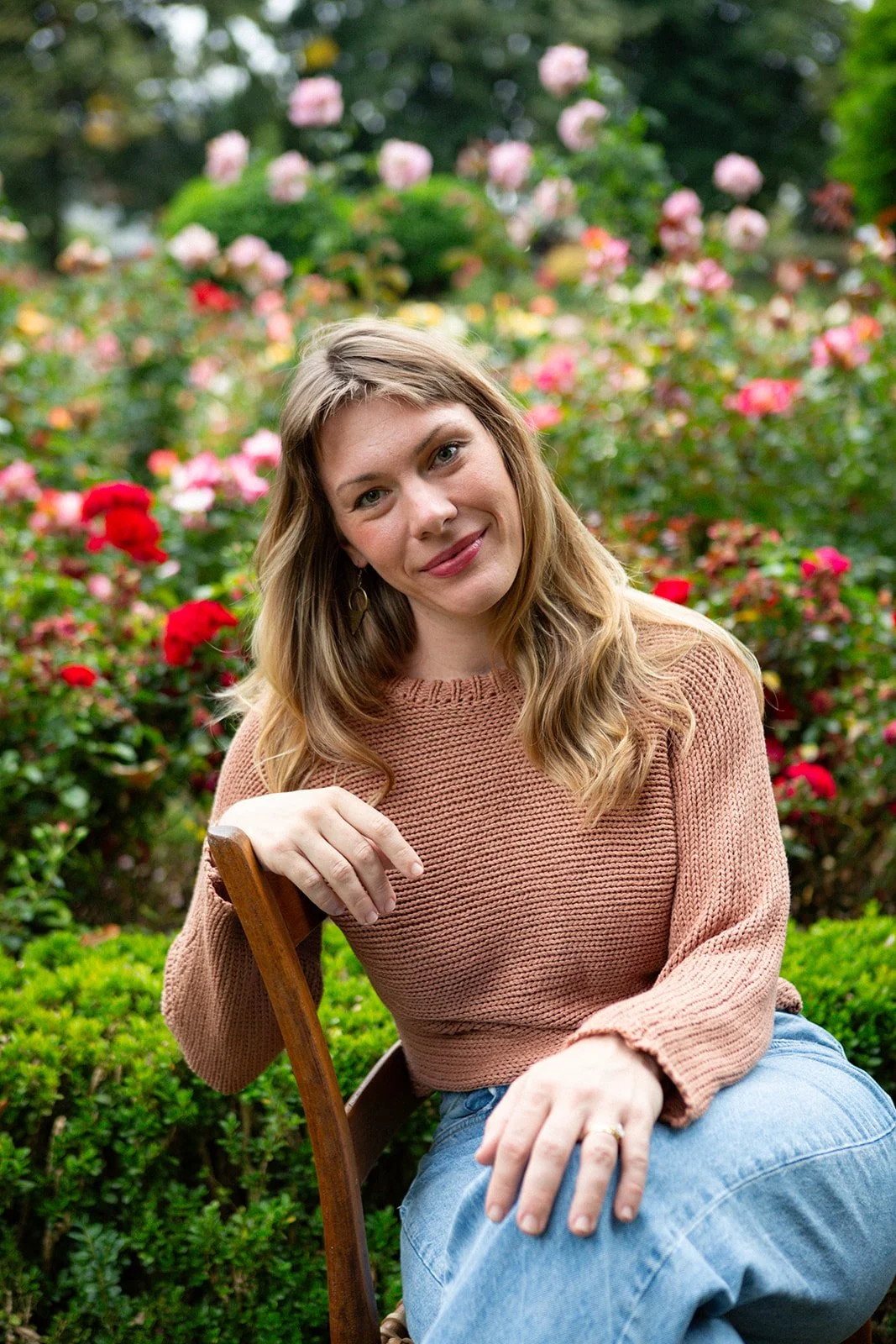
Lauren Frey
December 2025 | Issue One
Dearest readers,
Welcome to the inaugural issue of Copytext: A Magazine for Revision—a new, independent literary arts journal founded to celebrate human creativity by publishing writing and art in the context of revision.
The concept for this magazine first sparked in 2019 when I was finishing up my time in grad school, completing an archival research project. This summer, I returned to the door of this first love and knocked at three evolving questions:
How do we get to know a writer through their drafts? Usually, drafts are only shared in workshop, while the writer is alive and the work unpublished, or in an archive after the work is published, but the writer is gone—and their absence lends to the intrigue of that type of archival research. What would it be like if the writer or artist was present and given agency to curate how their drafts were made available to the public?
What happens when we view the act of publishing through the lens of an archive? So often, the processes of artists past are not publicly available, or worse, not preserved at all. And when so many marginalized communities have been excluded from traditional publishing and archival preservation, how can we—as writers, readers, researchers, and publishers—create an inclusive space to showcase and preserve the processes of living artists and writers in our time?
In emphasizing the context of creative work, how do we invite not only delight but study—close, careful, meditative attention to the choices on the page?
In June, I called my long-time friend and one of the most brilliant poets I know, Marisa Lainson, and told them about the concept of Copytext: a magazine that would publish the final piece alongside two, three, four earlier drafts? Ris asked if I had a team. Well, would you like to do it with me? I asked. Without missing a beat, she said yes. I cried tears of joy, and then we got to work. This magazine truly is a shared dream and vision between us. The expertise, innovation, literary sense, and intensive collaboration that they bring as Founding Managing Editor is just a dream come true.
We launched in August 2025 with a simple message: Send us your best work and two shitty first drafts! Meanwhile, AI-generated slop was increasingly flooding the internet. Yes, as a process-focused magazine, there is much we could say, and have said, about generative AI. As writers ourselves, we fear the main tragedy of this moment for creatives is that we may lose touch with the notion that good things take time. Giving your time to art is beautiful, and we believe the evidence of that time is worth publishing.
Your manuscript, your unpolished canvas, your Notes app draft, your scribbles in longhand, your scraps doc, your frustrated placeholders and footnotes, your folder with the seven “final versions,” your half-finished drawing in the drawer—these patinas and personal archives are beautiful and worth attending to. We founded this magazine because we want to create a place that invites others to read and witness that process of transformation.

In this inaugural issue, you will find stories of transformation, longing, and discovery around language itself. Lindsay Stuart Hill presses into the dual meanings of the word pine: “I can’t stand to sit inside the crawlspace of this word so I’ll turn it to a window, open it to you, pretend it’s different when you speak it.” Eric Roe revises his fiction piece to include his own name, confessing that the use of his name finally brings the story together. Kale Hensley summons the power of letting one’s name be transformed. And Neha M. Sampat captures the grief of language caught in liminal spaces: “Every migration story starts with desire and dis-ease.” Complementing these works of poetry and fiction are artworks by abstract painter Chad Glazener and textile artist Lisa Cox, both roaring with color and movement that (in Cox’s case, literally) burst beyond the frame.
You will also witness every kind of revision: expansion, reordering, reframing, addition, questions, exclamations, exchanging a word for another, the killing of darlings, contextualization, the reformulating of lines, the reformulating of entire forms—the list goes on. In artwork, you will witness revisions of rotation, layering, mark-making, symbol-making, and weaving in color and depth. You will witness revisions that took the place over three months and others that took place over nearly three decades (the earliest draft in this issue was written in 2007!). You will see creators who have sat with their work with such care. You will see messiness and brilliance. You will see time.
The praise for this first issue truly belongs to all who submitted to Copytext and our thirteen brilliant contributors whose work we are lucky enough to publish in this new, experimental way. Their willingness to disrupt the relationship between themselves and you, the reader, by presenting the final form alongside two earlier drafts introduces a different kind of autobiographical inquiry that is usually not available in real-time publishing.
By allowing their final versions to exist on the same page as their earlier drafts, our contributors are inviting a continual relationship between the finished and the unfinished: They are offering a permanent presence to their process. They are, as Stuart Hill writes, turning the light around and shining it back.
How beautiful, how deeply human.
As you read this issue, please allow me a brief note on the text to explain how we have structured and featured each piece in an archival way:
The Publication, Middle Draft, and Early Draft: Each contributor curated the three drafts that you will read. Their Early Draft might have been the second they wrote; the Middle Draft might have been the seventh or thirteenth! They chose which drafts to submit; we only asked for two authentic earlier drafts that led to the Publication.
Process Statement: Upon acceptance, contributors responded to 1-2 questions about their process. Their answers touch on everything, from the inciting moment of inspiration to specific techniques they may have used. We left it up to them which direction they wanted to go in in their response.
Dates: We’ve given contributors the option to date their drafts. If they have, you will see these dates in light gray text on the left side of each draft title.
Symbols, Slashes, Et Cetera: Some contributors have included strike-throughs and symbols in their very rough, early drafts. These are often transcriptions of longhand. We are so grateful for how this is represented, as we want Copytext to be a place that preserves the messy feeling of those very first drafts.
Copytext is an invitation for you to read closely—to slow down, explore, and have fun seeing the variants and decisions that these contributors made. We hope that Issue One provides an adventure for you—you who love to read beautiful work, to witness with close attention art in the yet-unfinished state.
With excitement and gratitude,
Lauren Frey
Founding Editor-in-Chief